
New: Bhimrao Ambedkar Prize in Global Pragmatism
The Society for the Advancement of American Philosophy (SAAP) has established the Bhimrao Ambedkar Prize in Global Pragmatism. It is the first prize from an American scholarly organization named in honor of Bhimrao (B.R.) Ambedkar.
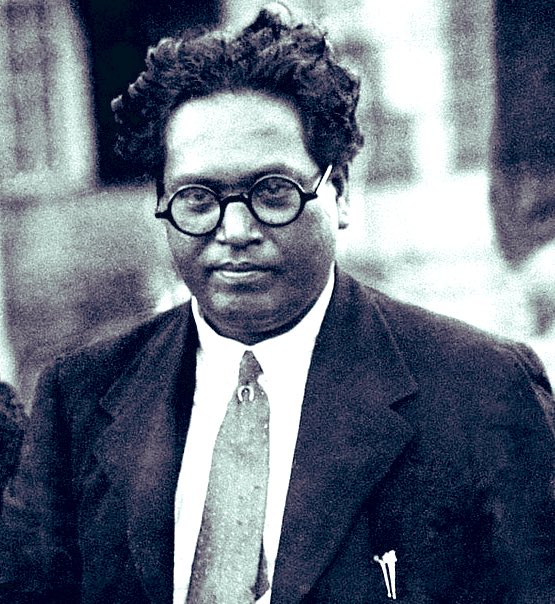
Bhimrao Ambedkar (1891-1956) was a well-known and highly respected political figure, philosopher, and civil rights leader in India. He studied economics at Columbia (from 1913-16) and while there studied under John Dewey.
Dewey was apparently very influential on Ambedkar’s thinking, according to the SAAP, and “upon returning to India, Ambedkar would lead a lifelong movement against caste discrimination, take an important role in the drafting of India’s democratic constitution in the 1940s, and orchestrate a mass conversion movement to Buddhism in the 1950s. He also developed his own theory of democracy, thereby adding to the global evolution of pragmatist thought beyond its American context.”
The aim of the prize is “to reward high-quality scholarship presented at SAAP’s annual conference that explores the interaction of American thinkers with understudied traditions and movements around the globe. The prize will also encourage research on what other cultures and traditions can contribute to the refinement of American philosophy.”
The prize includes a modest monetary award.
More information about it is here.
Good to see Ambedkar getting some more recognition stateside! I think he has a lot to offer American discourse on race, especially. I’ve blogged about him a few times (including some autobiographical reflection) for anyone who’s interested:
Annihilation of caste and race
My complicated relationship with B.R. Ambedkar
Ambedkar and the Nation of Islam as skillful means
Thanks for the words of support about Ambedkar, Amod! He needs our attention. And thanks for taking the time to blog about him. I find your blog posts provocative–but I also worry that they are potentially misleading to those encountering Ambedkar for the first time. His Buddhism is definitely unique. But I wouldn’t simply say he give up the four noble truths wholesale. He didn’t like that succinct way of putting those points ensconced in the pessimism they might create. But he certainly didn’t give up the problems with desire and the suffering it provokes. The concepts of each “truth” are recognizably spread out in various parts of his narrative in “The Buddha and His Dhamma,” as well as in the private first draft he penned in 1951 (“The Buddha and His Gospel”). I encourage interested folks to read BHD for the fullest account of his Buddhism: https://baws.in/books/baws/EN/Volume_11/pdf/12.
I think the perplexities about what he’s up to with Buddhism in the 1950s can be resolved somewhat if we consider that, as noted in a recollection from a Columbia classmate (Nima Adlerblum), he seemed to be motivated from 1914 onwards to combine Dewey’s thoughts on democracy as a way of life with more traditional strands of Buddhism. That recollection from Adlerblum and more on its implications are here: https://newlinesmag.com/essays/how-americas-philosopher-of-democracy-influenced-indias-leading-caste-reformer/. It’s definitely worthwhile to add him to our courses discussing both the evolution of American philosophy and innovation within Indian philosophy.