
“Philosophers were the first targets of Orbán’s ‘culture war.’”
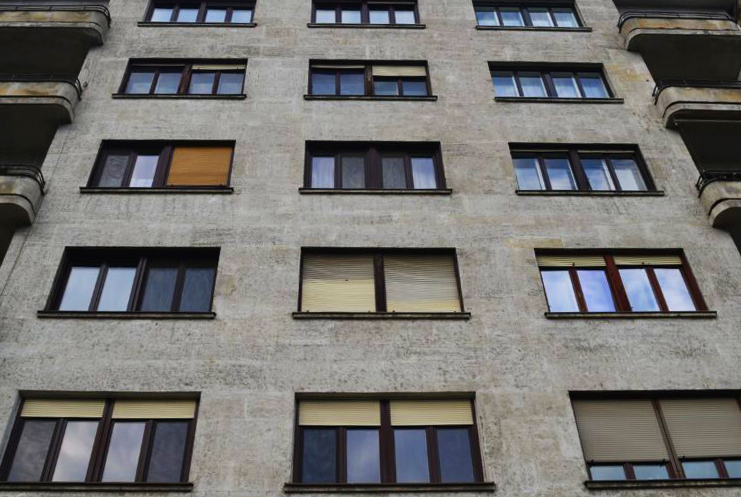
That’s László Szücs (Budapest City Archives), talking to Courthouse News Service about “the so-called ‘philosophers’ affair’: Orbán’s and his media’s first major anti-intellectual campaign.”
It is “the saga of how the government slowly throttled an archive and research center inside the old apartment of György Lukács, a world-renowned Marxist philosopher from Budapest.”
Szücs is part of the Lukács Archive International Foundation, a group working to reopen the apartment to the public.
Reporter Cain Burdeau writes:
The throttling began on Jan. 8, 2011, when the Magyar Nemzet ran a slanderous editorial accusing a group of prominent Hungarian philosophers—many of them associated with Lukács and fierce Orbán critics—of receiving “morally and legally questionable” funding worth about $2 million when Hungary was under a previous socialist-liberal government. The funds actually did not go directly to the prominent philosophers, but rather covered the work of research groups, numerous philosophers and doctoral students, book publications and conferences. At the time, the Magyar Nemzet (“Hungarian Nation”) served as the mouthpiece for Orbán’s freshly elected government.
Thus began the “philosophers’ affair”—an early and important thread to follow in understanding how Orbán’s “illiberal revolution” turned Hungary into Europe’s far-right model.
Only eight months before that editorial, Orbán and his right-wing Fidesz party had routed the long-governing center-left Hungarian Socialist Party and won a commanding supermajority in Parliament. With near-unchecked power, Orbán set about molding Hungary into a fiefdom where left-liberal opponents were not tolerated…
The Magyar Nemzet editorial was scathing in its attack on the left-liberal philosophers. It took particular aim at the 82-year-old Ágnes Heller, a Lukács disciple and prominent philosopher who held the Hannah Arendt chair at The New School in New York City.
Their sin, according to the Magyar Nemzet, was that they were “liberals” who had “not settled for staying in the ivory tower” and wished to “share their views and thoughts with a wider public beyond the academic arena.”
In other words, these philosophers—Heller, Mihály Vajda, Sándor Radnóti and others—had overstepped their positions by becoming outspoken critics of Orbán and his politics.
Shortly after the editorial appeared, Gyula Budai, Orban’s anti-corruption commissioner, launched an investigation into the “suspicious” philosophy grants. The probe was turned over to the police…
At first, it may have looked like the “philosophers’ affair” would blow over after the police found no wrongdoing with the grants.
Meanwhile, the philosophers filed defamation suits against the Magyar Nemzet, and the smear campaign was paused. In a big win, a Budapest city appellate court in 2016 eventually ruled the newspaper had defamed them.
But the matter was far from over.
After taking office, Orbán also had begun restructuring the Hungarian Academy of Sciences to suit his ends and bring culture and research under government control.
By threatening to cut off funds, he forced numerous independent institutes to sever ties with the academy and thereby brought them under his thumb. Allies were put in top positions and funds were cut for programs supported by previous left-liberal governments. The government also began cutting funds to public art programs it accused of “frittering away” taxpayers’ funds.
In 2016, the Hungarian Academy of Sciences announced it would transfer Lukács’ papers to its library and close the apartment, citing the archive’s high operating costs…
By 2018, all of the archive’s staff had either retired or been transferred. The Hungarian Academy of Sciences replaced the locks and shut the archive down on May 24, 2018.
Now, the city of Budapest is paying for the renovations of the apartment as a space for “conferences, seminars, discussions, exhibitions, and archival education workshops on philosophy, art and history.” It should reopen this year.
The full article is here.
(via J.P. Loo)
[Note: the original version of this post misstated the affiliation of László Szücs; it has now been corrected.]