
Giuliano Infantino, a postdoctoral fellow at the University of Toronto, has created new, freely accessible digital editions of the works of Hegel and Schelling.
About the Hegel collection, Infantino writes:
Digital Hegel texts have existed for a long time; they mostly follow older editions of the works, often in modernized spelling and without Hegel’s letter-spacing. This digital edition presents Hegel’s text according to the Gesammelte Werke (GW), the authoritative historical-critical edition: in the spelling of the GW, with letter-spaced type marked, citable line by line according to the GW pages. It contains only Hegel’s public-domain text, without the editors’ protected apparatus.
It is a work in progress, as further volumes will be added to it as its intellectual property protections expire. Infantino discusses the intellectual property rights issues related to scholarly editions of these texts here.
The Schelling collection is based on the text of the Sämmtliche Werke. Infantino says:
Schelling’s Sämmtliche Werke are widely cited, and for the late philosophy they remain the only complete edition to this day. Until now they could be read freely only as scans or in electronic versions that have not been checked against the print. This edition reads the text page by page from the print: original spelling, letter-spaced type, real Greek, the notes in their place, citable by division (Abtheilung), volume, and page.
Both collections feature full text search functions.
The editions were created using a “a multistage, machine-based procedure: the text is obtained directly from the scan of each printed page, guided by fixed rules for spelling, emphasis, and structure.”
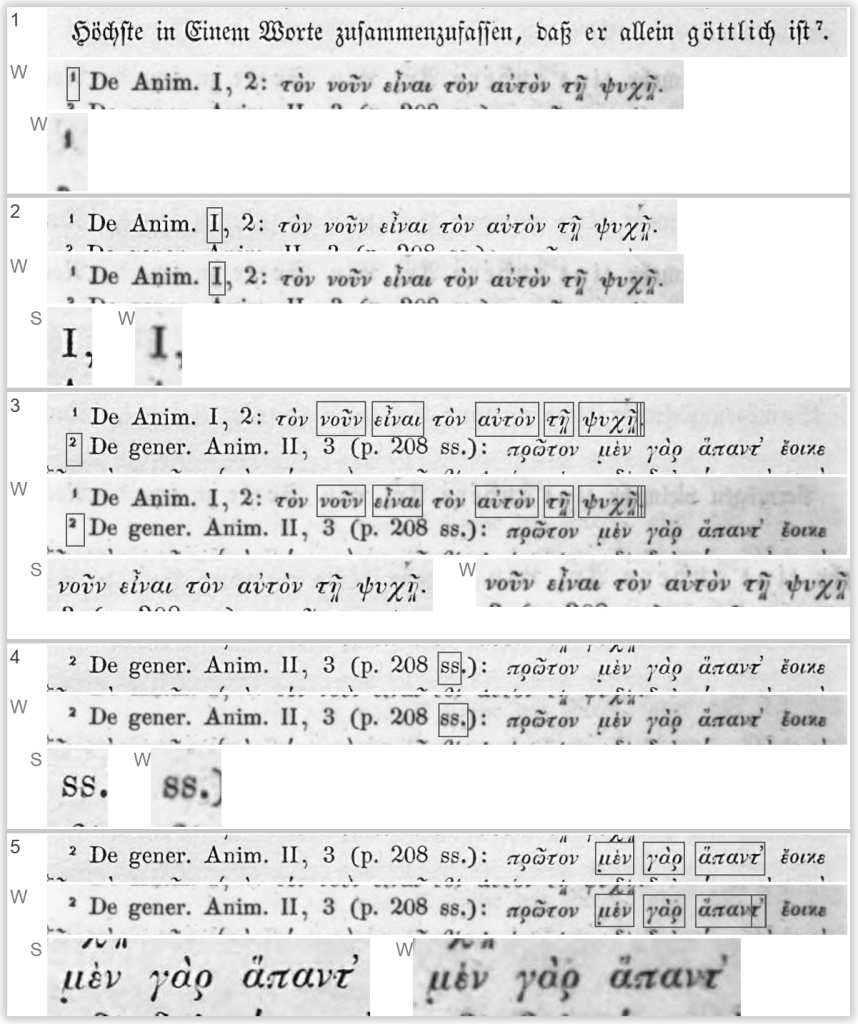
For example, for the Schelling editions:
The text is produced from three readings. An older electronic transcription supplies wording, letter-spaced type, notes, and Greek; to this is added the OCR [optical character recognition scan] of two copies of the print digitized by the Bavarian State Library. Where the three do not agree, the decision is made against the page image.
The procedure is described in more detail here.
I’d be curious to hear from Hegel and Schelling scholars what they think of these new resources.