
“There are, I find, things I want philosophy to do that it cannot. Or that I cannot do with it.”
That’s Amy Olberding, professor of philosophy at the University of Oklahoma, on the limits of philosophy that life sometimes makes vivid.
The guest post by her, below, is an excerpt from her truly remarkable book, Kill All The Chickens, which was published last month, and which you should all buy today (Amazon, Bookshop).
The book is a beautiful example of an academic philosopher breaking free of the standard publishing conventions of the profession (at which she was perfectly adept) to produce writing that is full of wisdom and personality, and that, even as it confronts us with an exploration of life’s difficulties, is nonetheless a pleasure to read.
Death Just Got Out of This Truck
by Amy Olberding
Maybe we should just skip the middle step and throw it all straight in the toilet? This is what I ask my mother as we together stand and consider the overburdened farm table. We are bereaved and so a steady stream of neighbors has come by to deliver casseroles and pies, lunch meats and cookies, chicken and potato salad. If death were an appetite, we’d have the means to satisfy and send him off by now. But he is not an appetite, nor have we any of our own.
Mine are a people of uneasy stomachs. I remember one night spent in the ER alongside some uncles and cousins, waiting to hear what the doctors would make of my grandfather’s alarming stroke-like swoon. That night we shared the TUMS bottle the way others might pass a flask. Bringing food to us bereaved is like giving a dog a pencil. There’s just not much that we can do with it, at least not much that anyone could count useful.
Grief is an affliction physical and material. It roils the gut and stops the sleep. It can put a tremble in the limbs, a quiver in the voice, a restless agitation run all through. It makes the knees want to let go, the body just to sink. It is tired but cannot ever really rest, a breath you cannot really catch. It can make the gaze go vacant, blank. Grief is eyes that see too much, make sense of little. How long have I now stared out the window into nothing, seeing nothing? Grief sets the body all awry. The body wants, but what? Something it can now no longer have, a voice in the ear gone mute, a touch tactile, now but memory. We stare at food; we do not eat it.

My book on death, the one I will not write, was originally going to have a chapter on the body. It seemed to me that one of the troubles with philosophy on grief is that it misses out on bodies. The philosopher’s talk is all of what loss means, what grief can make you think. It speaks to what the mind and heart may feel, but not the stalling, empty mind or trembling heart. It speaks to one who speaks and thinks, not the instinctive, aching animal, not the raw creature all sensation without sense. This is not a novelty where philosophy is concerned—philosophers have long neglected the cruder materiality from which thought transpires. But still, I wanted some way to make philosophy answer not to thought or feeling or meaning, but to the brute stuff upon which all the rest is set. I wanted some way to make loss less like an experience of the mind and thought, to make loss on the page more like itself in life, an experience altogether nauseating. Before the reasoning or meaning, first the gut.
There are, I find, things I want philosophy to do that it cannot. Or that I cannot do with it. There is nothing wrong with thought, with seeking out some sense. But what can be made sense is rarely all there is; it leaves in remainder much, too much. Worse still, even good sense can be misleading. You can get your thoughts in careful order, root out all mistake, prepare to read the vexations of experience with well-honed training pitched to make vexations yield. But all that practiced thought and careful habits of the mind can leave you unready for what comes. Don’t trust them more than they can bear. The body is not a prison, but neither can thought escape its meaty and substantial bonds. I cannot make philosophy bend to this, I think, not in a way that is not all false and false confidence.
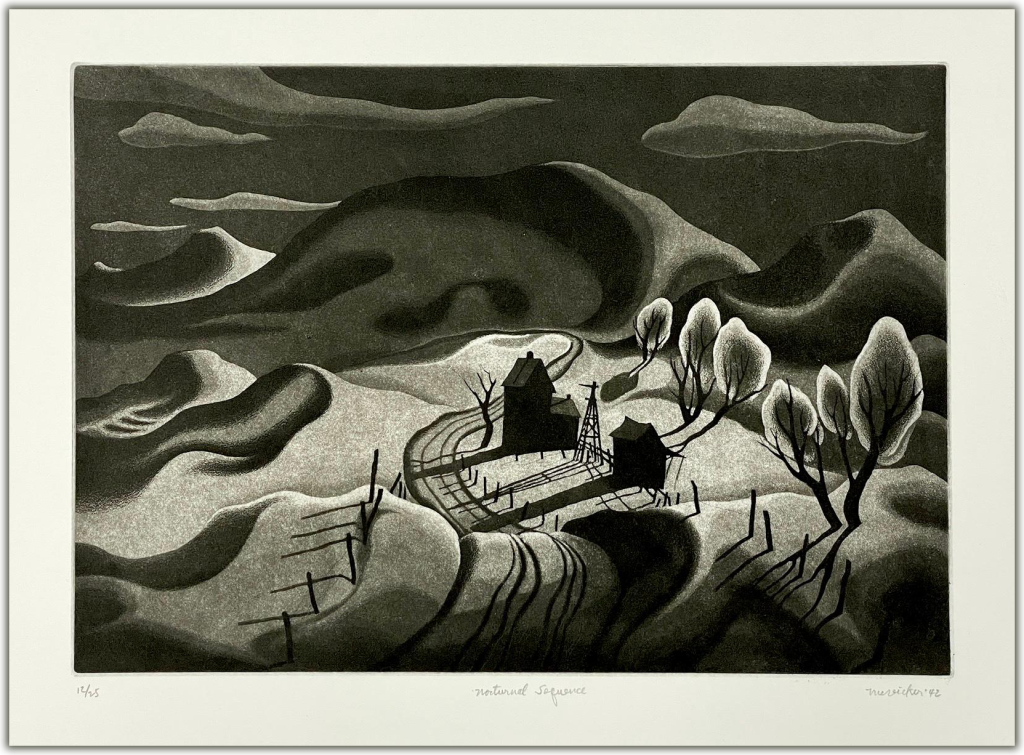
Many years ago now, when the farm was still a working dairy and the place was hectic with cows and work, my grandfather hired a milker to come in and help. The milker had a love of the drink and would sometimes cry off work for a hangover, but he was, I suppose, reliable enough that they kept him on. One day, he’d taken the farm’s yellow truck into town to retrieve some feed. At a four-way stop sign, he was briefly bested by a fancy man in a fancy car, the kind of man who didn’t want to wait on a beater truck that got there first and instead just blew the stop sign so he’d get ahead. The milker would have none of this, so he drove that yellow truck right up to and behind the man’s bumper for blocks that soon turned into miles. Finally, the fancy man pulled over in a parking lot, the milker close behind. Both men got out of their vehicles. The fancy man planted his feet wide and bellowed out a caution meant to be severe: I have to warn you that I just got out of karate! The milker didn’t even pause before he answered quietly, Well, I just got out of this yellow truck. Before aught else could happen, the milker’s fist had found that fancy man and laid him flat.
Karate class is fine and so, too, is philosophy. But make no mistake, you can’t really get ahead of it. Loss comes at you like a fist.
“Death Just Got Out of This Truck,” from Kill All The Chickens by Amy Olberding.

Amy Olberding’s sensuous and thoughtful prose reminds me of Annie Dillard at her best. Ordered.
Start with Descartes.
Can’t go wrong with Descartes.
But freshmen are not so engaged with such purported proofs of God as they are with the meaning of life – and death.
(I had Albert Camus’ *The Myth of Sisyphus* in my hip pocket for a year at 17 years old – 50 years ago.)
A semester or two later, they may be swayed by the discipline and rigor of analytic methodology and choose to major in philosophy, perhaps with ambitions for law school.
But what often brought them to Phil101 was an existential obsession with the meaning of life – and death, perhaps God.
Perhaps because of her expertise in early Chinese philosophy, Amy Olberding may be more sensitive to these issues than some others.
> (I had Albert Camus’ *The Myth of Sisyphus* in my hip pocket for a year at 17 years old – 50 years ago.)
For me it was Nietzsche first, in Kaufman’s translations. Then Plato. Your comment reminded me that soon after I learned ancient Greek, I began to copy around everywhere a copy of Plato’s Apology in Greek. (For people who know, the little yellow Cambridge University Press student edition edited by Adela Adam. Text, notes, and vocabulary, all in one.) I must have read it more than a hundred times between undergrad and grad school.
I’m a longtime fan of her writing just because of essays like this.
lot’s of limits to the uses of understanding when it comes to living through….
There are things philosophy helps us think better about. That is the one thing philosophy does.
I think the point of this piece is interesting. I’ll give it some thought. But I actually don’t appreciate the writing. Since part of the point of sharing this here was to praise its tone and style, it seems like a comment on this falls within proper bounds.
I found the tone highly mannered, affective, and, frankly, a bit pretentious. I’m a plainspoken person. My rule is: if I wouldn’t say something like that to a stranger in a bar or a cab driver, I shouldn’t write it either. It’s especially strange in the context of this piece, which adopts a self-consciously artsy, high-minded tone to discuss the limits of philosophy up against the reality of life. The message and the medium are in tension.
This is a good rule for most kinds of writing (including almost all pihlosophy), but not all. For example, it is not a good rule for poetry or songwriting; for similar reasons, it is not always a good rule for personal essays.
(Note that this isn’t to say anything one way or the other about this piece in particular. I get your annoyance, but I think I’d need to read the rest of the book to know whether I would share it.)
To each their own. I have always admired Olberding’s writing style. The tension you seem to find off putting isn’t arbitrary, though. This is a philosopher who is literally reflecting on the tension that you are detecting.
So, if that is the tension that this essay explores then why would it be at all off-putting that it enacts it? I genuinely do not understand this criticism of the essays style.
In this particular case, Olberding has had to perform a substitution in order to offer a philosophical reflection at all, and so the the essay is not about death and loss of the person who has died, but instead about the fact that theorizing death doesn’t do the thing that she’d like philosophy to be able to do with the meaning of that loss. And the audience for the reflection is not her mother but someone who, like her, deals with the problem of getting philosophy to bend to that reality. Why should she not assume that her audience can think along with her in this way? Why should she assume that she’s having a conversation at the bar with someone who doesn’t experience the tension she’s grappling with?
For many of us who are highly trained in philosophy (who have spent our entire lives as professional philosophers), the idea that philosophy (as a particular sort of mental discipline often manifested through writing) is supposed to help us with real life is a powerful addiction. When it fails to do that, we still reach for it. Meditating on that tendency and frustration is both personally and philosophically meaningful to me, and I appreciate the opportunity to reflect on my experiences in light of those that Olberding is sharing.
In any case, what a strange expectation to impose on the things that you read or even that you yourself write — that they should sound like the sorts of things that you would say in a bar or to a cab driver. I’d be very surprised if most people who go to the trouble of developing a writerly voice aspire to confine themselves with that sort of expectation.
I hope it is not too impolite to point out that for anyone who is a professional philosopher, (especially the tenured kind) philosophy has quite obviously the ability to help out in real life. Of course, I don’t mean to suggest that Olberding’s experiences and dilemmas are not genuine; I just think it is disingenuous to claim that the academic life is somehow purely a life of the mind, (as, for example, in the monastic sense), with neither practical nor worldly consequences, because for professional academics that is surely not the case.
It’s not impolite, but I’m not sure if you thought I was being disingenuous or you were suggesting that Olberding was implying this. In either case, impolite or not, it misses the point. I’m not claiming that at all. And this selection from Olberding’s book is quite clearly implying something else entirely.
Your comment suggests that you believe that either I or Olberding take issue with the following:
I never said anything that should have led to the conclusion that I rejected that claim (and I’m surprised that you would read my response to a criticism of the style of Olberding’s writing in this way).
It’s really very simple, though it may not characterize everyone’s experience. The point is simply that when one’s mom dies or one’s pa dies or one’s spouse or kid or best friend dies… at that point, even people who have very been very successful in convincing themselves that “philosophy” (especially the academic sort) can make lots and lots of difference in the world suddenly are confronted with the fact that this skill is unable to manage a situation that one had come to believe it should have been able to help with.
This selection from Olberding’s book would make no sense at all if she thought philosophy couldn’t be helpful in some real sense. Feeling like philosophy is not equipped to handle a task it is supposed to handle requires believing that it can be useful, that it isn’t all fluff to begin with.
My own point, in case it needs to be emphasized, is that criticizing her writing because it is talking about something “real” in a voice that isn’t “real” doesn’t appreciate what is “real” about the experience she is describing.
You seem like you would enjoy Hemingway
I often get in deep discussions with barflys, as did Aristotle. Their perspectives – far distanced from academic philosophy – homelessness, addiction, alienation from family, friends, romantic and sexual partners, death, and other concerns – may make them highly receptive to an open ear and compassionate dialogue.
Meeting people where they are seems to me the first step i
That which makes plainspoken language more accessible and meaningful to you is the same mechanism which makes flowery, emotive language more meaningful and accessible to others.
“You can be the ripest, juiciest peach in the world, and there’s still going to be somebody who hates peaches.”
— Dita Von Teese, American philosopher
This was wonderful to read. To me, the best philosophy is literary.