
Russian Government Investigating Institute of Philosophy
Russian Philosopher Svetlana Mesyats is under house arrest and the offices and homes of several other employees of the Institute of Philosophy of the Russian Academy of Sciences were searched, according to social media postings from a pro-Russian government account and other media sources.
Meduza reports:
10 researchers were taken to the Investigative Committee of Russia and interrogated until late in the evening. The outlet noted that the whereabouts of several employees had remained unknown for four days, with no contact from them. Following the searches, one institute employee was detained: Svetlana Mesyats, listed on the institute’s website as a candidate of sciences and head of the project to prepare a new complete edition of Aristotle’s works.
The reason for the actions against the Institute of Philosophy is unclear. The accusation appears to be that the Institute mishandled funds intended for translations of Aristotle. Yet others have suggested that the actions are political payback for the Institute refusing to accept Anatoly Chernyaev, who supports the invasion of Ukraine, as director.
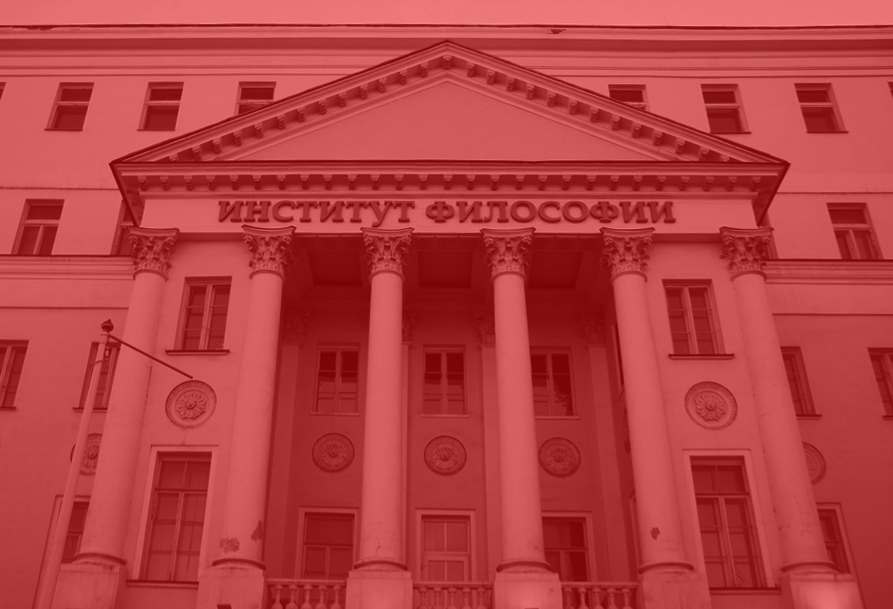
Mediazona reports:
Investigators believe that the institute’s employees received approximately 52 million rubles to prepare a complete collection of Aristotle’s works, but the publication “never appeared,” a source told Novaya Gazeta.
Instead, only articles and translations of individual treatises were published—in particular, the works of researchers Volkova and Mesyats—but the overall result “did not correspond to the scale and theme of the declared project,” the publication states.
Investigators also believe that the institute’s employees engaged in “double funding”—including the same research projects in reports for different years. A Novaya Gazeta source believes this could have occurred “by mistake” due to the complex reporting system and the large volume of documents.
It also provides some background related to the current events:
The public conflict surrounding the Institute of Philosophy of the Russian Academy of Sciences has been ongoing for approximately five years. In late 2021, the Ministry of Education and Science appointed Anatoly Chernyaev, a specialist in the history of Russian philosophy, to head the institute. Both the appointment procedure without an election and the candidacy of Chernyaev, whom colleagues called a “nameless PhD candidate,” sparked protests from many institute employees. Chernyaev lost his position a week after his appointment. Guseinov became acting director, and Chernyaev was dismissed two years later.
The newspaper “Zavtra” described the conflict between the philosophers as political: “Chernyaev repeatedly criticized the position of the Institute of Philosophy of the Russian Academy of Sciences, many of whose employees not only did not support the SVO [war in Ukraine], but also created Russophobic centers abroad.”
The BBC Russian Service reported that the “Orthodox oligarch” Konstantin Malofeev was behind the attempt to replace the leadership of the Institute of Philosophy of the Russian Academy of Sciences in 2021. His television channel, Tsargrad, did indeed attack the institute, calling it in its reports “a center for the destruction of Russia” that “acts as the brain trust of a liberal, destructive, protest, cosmopolitan movement with roots in Soros and Sharp.”
After his dismissal in 2023, Chernyaev complained in an interview that the “Aristotle’s Legacy” project received targeted funding, while his own project to compile the complete works of the Russian mystic philosopher Vladimir Solovyov did not have the status of a “state assignment.” Chernyaev, however, called Aristotle “the founder of Western democratic theory.”
Information from knowledgeable others is welcome.
Other reporting on this story can be found here.
UPDATE: A new and detailed article about this series of events is here.
In response to the show trial of the Russian anarchist mathematician Azat Fanisovich Miftakhov, large parts of the mathematical community mobilised to demand his release and condemn the Russian government’s persecution of him. Miftakhov is, however, still, to my knowledge, in gaol. On purely instrumental grounds, perhaps it would be useless to kick up a fuss about this case. But perhaps we should anyway (though we ought to wait for people in contact with our persecuted comrades to determine whether that might worsen the situation).
This is obviously not funny at all, but if it turned out to really be about Aristotle it would be a tiny bit funny.
I retract my weak attempt at humor. This is horrific.