
Luke Fenton-Glynn, a philosopher at Monash University, and before that, University College London, has died.
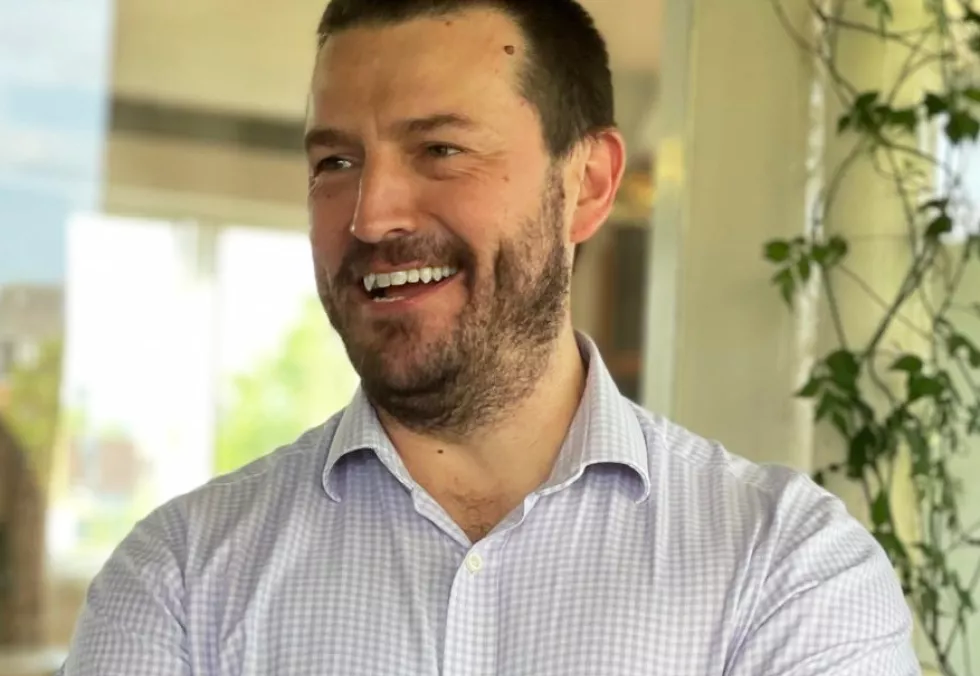
Dr. Fenton-Glynn worked in philosophy of science, metaphysics, and epistemology, with a focus on causation, probability, and peer disagreement. He is the author of Causation (Cambridge, 2021) and various articles, which you can learn more about here.
He moved to Monash University in 2023 after ten years at University College London. Prior to that, he held postdoctoral positions at the Munich Center for Mathematical Philosophy, California Institute of Technology, and the University of Konstanz. He earned his D.Phil. and B.Phil. in philosophy, and a B.A. in philosophy, politics, and economics, at the University of Oxford.
Luke Fenton-Glynn died in June of cancer. He was 43.

Luke was my first DPhil student. I was very pleased when he moved to Monash – I thought we’d have much more opportunity to catch up with him closer. What with this and that, and life getting in the way, we didn’t manage to meet up in the past couple of years. ‘No worries’, I thought, ‘he is just in Melbourne and we’ll surely see each other soon’. Not to be. My thoughts are with his family and friends.
My kind, generous, and brilliant teacher for almost ten years. An inspiring, stabilising pillar through some of my most difficult days. I will miss you dearly, Luke.
This is such terrible news. Luke was a joy to spend time with – funny, interesting, kind, and always keen to enjoy life. He was a huge part of the UCL philosophy department, and he was a supportive colleague and a great friend to me during the time I was there and since. I know that many people from UCL philosophy will miss him very much.
I was already missing hanging out with him since he moved to Melbourne. I’m so sad I can’t hang out with him again, have a beer, and discuss probability and the laws of nature. Rest in peace, Luke.
Luke was an excellent colleague, an excellent person and an excellent philosopher. His work on probability was a revelation to me. As a person he was warm and personable in his own Northern way. I felt that we would always be on the same side on everything. His departure was a great loss to UCL and now his passing a great loss to the world. My thoughts are with his wife and children.
Luke was a wonderful person and a wonderful colleague. He and I started at UCL at the same time, and just having him there has helped me find my footing at UCL and in the UK in so many ways. I’ve missed him a lot since he left for Monash, but I always liked having this picture in my head of Luke living it up in Australia with his wife and kids. It was devastating to hear this, and my thoughts have been with his family since.
We are really hurt by this news. A wonderful colleague and lovely person.
Luke was very generous in meeting with me and corresponding over email when I was a first-year PhD student first becoming interested in the philosophy of causation. I didn’t interact with him much more than that but those early interactions were very encouraging for me. It’s so sad to hear that he has passed at such a young age. I’m sure it pales in comparison to his contributions to the lives of his family, friends, and colleagues, but I’ll note that his BJPS paper “A Proposed Probabilistic Extension of the Halpern and Pearl Definition of ‘Actual Cause’” is a tour de force and the Godfather-inspired vignettes are a treat.
I was so sad to hear of this. Luke was a postdoc working with me at Caltech and we co-authored a paper. He was an ideal colleague–smart, friendly, easy-going. My heart goes out to his family.
Very sad news. Luke was a wonderful colleague at UCL and a lovely human too! We will miss you Luke
This was so shocking to hear. He was a co-author on one of my favorite papers that I was an author of (https://philarchive.org/rec/FENUOT-3), and I had thought he would have a long and glorious career, even though he was far enough away that I hadn’t seen him in years.
Luke was a fantastic philosopher and colleague. “Let me handle it”, he simply told me when a student had major issues that needed his attention as Undergraduate Tutor at UCL. Calm competence, readiness to take responsibility, and the quiet assurance that the problem would be dealt with properly. I will be reading his book Causation in my graduate seminar this coming year. Its value speaks for itself. It was an honour to be your colleague, Luke. You will be deeply missed.
Such terribly sad news. Luke was a brilliant, sophisticated and resolutely sensible philosopher and a conscientious, generous, and supportive friend and colleague. I count myself lucky to have known him and studied together for a while – many of us learned a huge amount from conversations with Luke and from graduate discussion groups on his outstanding work, including the classic ‘Deterministic Chance’. He will be hugely missed and my heart goes out to his family.
From 2017 to 2024, I worked with Luke on my MA and PhD projects at UCL. He was a wonderful person, philosopher, supervisor, and friend, and I learned a lot from him. Over those years, including throughout the pandemic, he was always very generous with his time and, among other things, was remarkably clear and thoughtful in conveying complex concepts. One phrase I will remember especially well from his work is “non-exceptionless generalizations” in the context of scientific laws. Luke distinguished “minutis rectis” laws — roughly, laws that hold when the relevant details are right — from ceteris paribus laws. My thoughts are with his family; may his memory live on.
Incredible supervisor and role model. I’ll carry his kindness and advice with me always.
Luke was one of my PhD supervisors 2013-17. He introduced me to a world of literature, ideas and arguments (including his own) that still shape my research today. He encouraged me and guided me through my first publication, and also suggested to the UCL department that I cover his courses when he went on paternity leave – a career-forging gift for a student trying to gain experience. Luke was super smart, without ego or pretension. He was warm, kind, friendly, and hugely generous with his time. I was so happy for him when he got the job in Monash, but also sad to think he’d be so far away. At only 2 years older than me, I assumed Luke and I would be reconnecting as philosophers and friends infrequently though long into the future. Not to be. My deepest sympathies are with his family.
This is very sad news! I really liked his paper on epistemology of disagreement.
That is so terribly sad. I was the external examiner for his PhD back in 2009 — definitely one of the best I’ve ever examined, and the viva was a delight.
I was devastated to hear these news & my heart goes out to Luke’s family. I only took one course with Luke – a course on the philosophy of science during my MPhil – but I remember it so well. Luke was an amazing teacher, and it’s still the case that whenever I find myself in a philosophical discussion about either causation or probability, he’s the first person I think about, as I try to recall how he would have explained different theories of causation and probability in his characteristically clear and calm way. Rest in peace, Luke.
This is heartbreaking. Back in the day, Luke and I were fellow postdocs, learning from Chris Hitchcock. Luke wasn’t just a wonderful human being, but also a philosopher’s philosopher. Open minded, curious, intellectually generous, and always so careful with his thoughts. A wonderful colleague to be around. I can only imagine what his family must be going through.
Like several others posting here, I got to know Luke during his time as a post-doc at Caltech, where he was one among a group of excellent philosophers of science who worked on contemporary issues. I was not one such philosopher, but I found Luke a wonderful person to talk to about both his work and mine. Before the pandemic, I saw him every couple of years when passing through London, where he met me with a warm greeting and conversation over a pint before heading home on the train. I tried to continue reading his work when I came across it and always found it as engaging and thoughtful as the man himself. I’ll continue to be thinking about Luke and his family during this difficult time.
I was lucky enough to be taught by Luke during my undergraduate degree at UCL, a degree I found challenging (with imposter syndrome aplenty). I enrolled in all of Luke’s modules, owing to his calm and clear delivery of difficult concepts, and in third year he was my dissertation supervisor (I was absolutely thrilled). Luke was more than just a teacher or supervisor, he was a mentor and role model, and I sincerely hope Luke knew what a huge impact he had on me – and I’m sure I speak for all my fellow students as well. It’s rare in a subject like philosophy to find teachers with patience, kindness, intelligence, good humour and absolutely zero ego, someone who genuinely wants people to understand and enjoy the subject. I think of Luke all the time; there’s a little piece of him in all of my accomplishments since, and I will remember our conversations until the end of my days. The world has truly suffered a significant loss.
I can’t express how much reading these comments have meant to me. I have come back here several times to re-read them, and I have printed them out for our children, so that they will know what their father meant to people. I know how much he truly valued all of his colleagues and students – many of you who I know, or whose names I recognise from Luke’s stories. It has been a difficult time for us all, but knowing that he is remembered has brought me a lot of solace. So thank you all for taking the time to share your memories.
Luke taught me two courses during my MPhil at UCL. I hadn’t taken much to formal logic and philosophy of science before this, but Luke inspired and encouraged me; I loved learning from him. Besides being a great teacher and philosopher, he was also such a lovely guy. I was devastated when I heard of his passing. I will always remember him. My thoughts are with his family.