
About a year ago, the UK government’s Office for Students (OfS) (whose “free speech czar” is philosopher Arif Ahmed) levied a fine of £585,000 on the University of Sussex after investigating how the university handled the case of philosopher Kathleen Stock, who resigned after students protested her views and called for her to be fired.
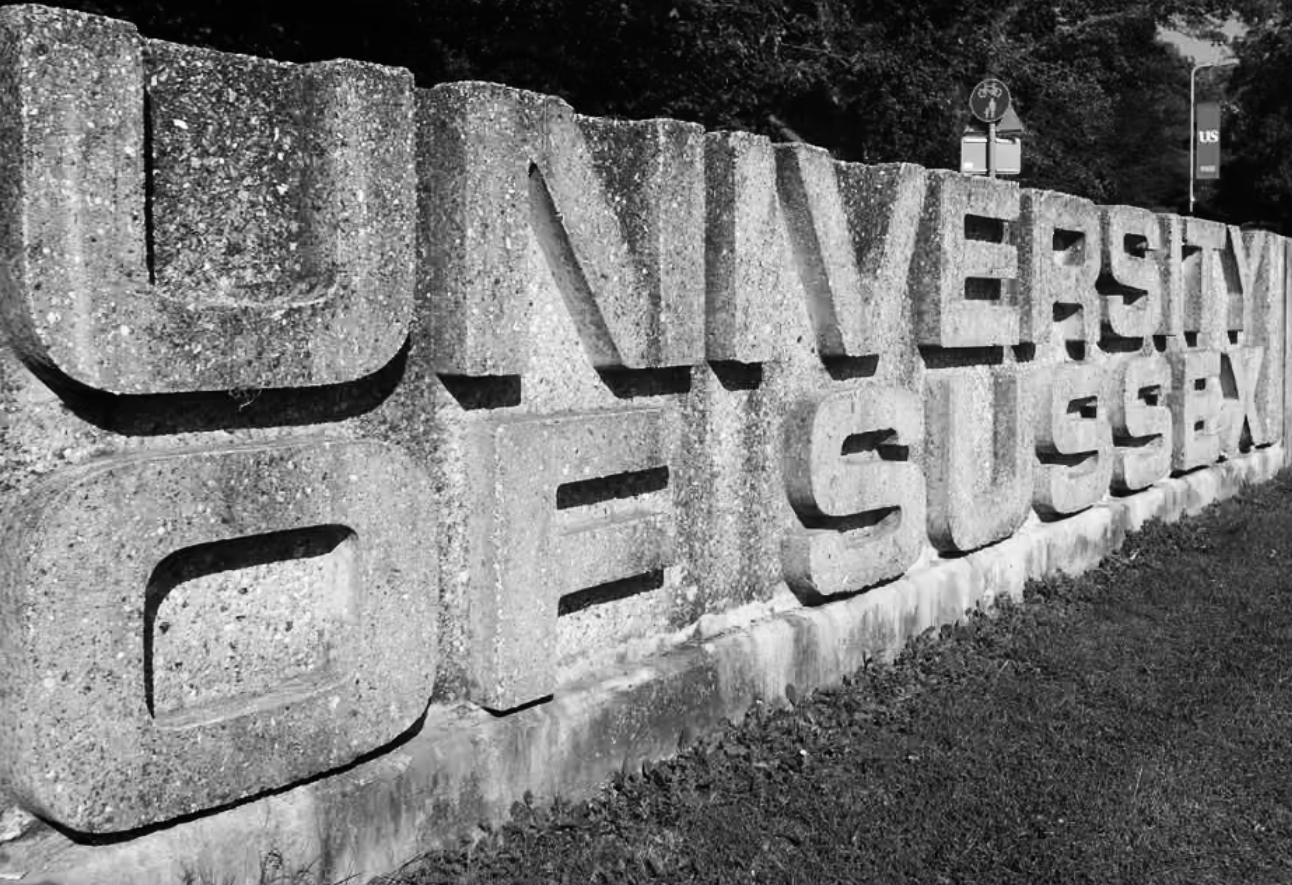
That fine has now been overturned by the UK’s high court, reports The Guardian.
The court
rejected claims that the university breached free speech regulations in a case involving its former professor Kathleen Stock. The ruling is a damaging blow to the credibility and management of the Office for Students as the court rejected the regulator’s lengthy investigation involving Stock’s resignation in 2021, which followed protests over her views on transgender rights and gender identity.
While the investigation seemed prompted by those student protests, the official OfS criticism of Sussex ended up focusing mainly on the university’s trans and non-binary equality policy statement (which is largely about equal opportunity and treatment for trans students, and about the unacceptability of “abuse, harassment, or bullying” directed at trans people because they’re trans) and the alleged “chilling effects” of that policy.
Overall, the ruling states that “OfS has misdirected itself in a number of key ways” and found for the university on most of the issues.
It also stated that the OfS was “biased” in its investigation:
The OfS was determined to find significant breaches and therefore had no wish to consider whether the University had now complied. To reach a conclusion that the breaches had been remedied would have undermined the strategy that… the OfS had adopted in October 2021, pursued for three and a half years, and invested very significant resources into. The evidence supports a finding that the OfS had closed its mind to anything that would lead to not finding breaches and being unable to therefore sanction the University.
You can read the decision in its entirety here.

I’m not a lawyer and would like to hear some input from folk with legal experience, but I’m a bit uneasy with Justin’s claim that the court “…also stated that the OfS was “biased” in its investigation”.
The full document concludes the relevant section with the judgement that “[443.] The fair-minded, informed and not unduly suspicious observer would … conclude that there was a real possibility that the decision-maker here was biased in the sense of having a closed mind to the legal and factual merits of the University’s position.”
I take it that “real possibility” of bias can be sufficient grounds for overturning a decision like this, but that, on its own, it does not amount to the stronger claim that the decision-maker *was* biased.
Again, maybe I’m not sensitive to some aspects of legal language. I’d like to hear from someone with legal experience whether the distinction I point to is sensible.
From the decision:
455. I have found for the University on Ground 6C. The Final Decision was vitiated by bias because the OfS approached the decision with a closed mind and had therefore unlawfully predetermined the decision.
Thanks Justin, I missed that.
Need to read the opinion carefully, but this is, on its face, disappointing to those of us who thought Arif Ahmed was well-suited to the appointment.
Why? Surely it is, on its face, more disappointing that the High Court should reward a university who supported protesters instead of one of its lecturers, someone who was expressing views held by 95%+ of the wider community.
Well, the High Court isn’t rewarding anyone. It’s overturning a biased and erroneous ruling. The university had a policy, Stock didn’t follow it, consequences happened. This is all kosher; as the court found, OfS erred in fining the university for legitimately enforcing their policies against bullying and hate speech. So they overturned the fine, simple as.
Ok can you remind me what the policy was that Stock didn’t follow?
“The university had a policy, Stock didn’t follow it, consequences happened.”
This is not what happened.
This isn’t what happened nor what the ruling or judgment was about. Please go read up on the facts. You’re mixing up two issues. There was a policy, and there was also the issue of Kathleen Stock and student protests. The university did not ‘enforce their policy’ against Stock, they never accused her of violating university policy (though Stock argues she and her academic freedom was not adequately protected by the university). In parallel, the OfS charged the university on the basis that the wording/nature of their actual policies chilled free speech, and the ruling is challenging that argument. The OfS charge wasn’t about Stock, nor was the ruling about the OfS charge about whether or not Stock should or should not have been held to violate university policy. This simply isn’t what the ruling is about.
Do you have a source for that 95%+ statistic?
nInEtY fIvE pErCeNt PlUs Of ThE wIdEr CoMmUnItY
?????
The alternating upper case/lower case writing style is used to mock. It’s often combined with this image of Spongebob Squarepants. The implication is that your 95% estimate is way off. This study suggests that you are indeed way off, but this is just what I found after 5 seconds of Googling, so who knows.
“I didn’t know that” (said in Michael Caine accent). My findings were based on an informal survey of the chaps at my club.