
David T. Wasserman, a bioethicist at the National Institutes of Health, died this past December.
The following memorial notice is by Sean Aas (Georgetown University).
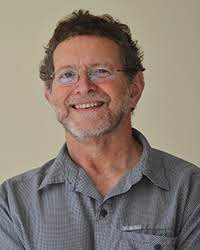
David T. Wasserman, bioethicist and philosopher of disability, health, genetics, and law, passed away peacefully on December 28, 2025, at the age of 72 in University Park, Maryland.
David pursued a career applying questions of ethics and philosophy to issues ranging from genetic testing to disability rights to criminal appeals. He worked over two decades at the Institute for Philosophy and Public Policy at the University of Maryland, College Park (the Institute is now based at George Mason University). In 2007, he co-founded the Center for Ethics at Yeshiva University, led by his longtime collaborator, Adrienne Asch, before serving on the faculty of the National Institutes of Health Center for Bioethics, where he pursued bioethics research, organized academic events, and mentored numerous post-baccalaureate and post-doctoral fellows.
David was the author of more than one hundred published articles, chapters, and reviews across philosophy, law, and bioethics. He was a founding figure in the philosophy of disability and contributed extensively to debates on the ethics of reproduction. In 2015, he defended the ethical propriety of reproduction itself against David Benatar’s ‘anti-natalism’ in their book, Debating Procreation. David co-edited the Oxford Handbook of Philosophy and Disability and has served on the editorial boards of journals such as Ethics and the Journal of Applied Philosophy. David was named a Fellow of the Hastings Center, a major honor in the field.
David graduated Yale University with a bachelor of arts in philosophy in 1975, the University of Michigan Law School in 1978, and the University of North Carolina, Chapel Hill with a master of arts in social psychology in 1984. A devoted father and husband, David married Susan Ginsberg in 1992 and had two sons, Jacob and Adam Wasserman. He shared his love of hiking, history, and humor with his many friends and family.
Through I didn’t know him well, David was always warm, smart, and fiercely curious in our exchanges. I will remember him fondly.
David was very kind to me as a graduate student (I met him at a conference in NYC and he was very supportive). He was equally generous when I was a junior faculty member, encouraging me with chapter invites and even driving to a debate I was participating in. I will, likewise, remember him and his work fondly!
Shocking. Terrible news. I am so saddened. He was such an important and vital voice.
This is sad news. I’ve always appreciated David’s thoughtful work on procreative ethics and the philosophy of disability. I remember sheepishly contacting him as a new post-doc to see if he would contribute an article for a special issue I was editing. He was so kind and generous in his response, not only agreeing to participate in the project, but also expressing interest in some of the stuff I was working on and offering to discuss and comment on it. I didn’t know him well, but I’ve learned a lot from his work and value the brief exchanges I got to have with him.
I was sad to read this. I have been so influenced by David’s wonderful research. He was an extremely generous colleague, even though he did not know me personally. One of a small handful of philosophers who have had the most impact on my professional career.
I had the great fortune of sharing an office with David as a postdoc at the NIH. He was extraordinarily generous with his time, especially as a mentor to aspiring bioethicists. I was struck by how he spoke about issues in moral philosophy, not as a set of puzzles to be solved, but as questions that touched real people whose dignity and well-being were at stake. I will remember him with deep gratitude.
David was first a mentor, then a colleague and later a he became a friend. He was incredibly generous to me as a graduate student, making time to meet with me, talking to me about how to best structure our communications (I lipread, he stuttered – posing challenges for both of us), and was just generally supportive of my work. As I wrote to some friends, I last saw David in September 2024 at Streetcar 82, a deaf-owned brewery near his home in Maryland. We had a grand time sampling their Oktoberfest ales outdoors until the skies opened up! The patio umbrellas provided some shelter from the rain, but after a lot of dodging rain and even more laughter, we ended the evening. I have many memories of David, but the memory of him grinning with delight at the charm of the experience – good beer, good eats, good friends, good philosophy talk, all while immersed in a signing space is one of my favorite memories. A life well lived.
David made an outsize impact on my thinking and career over the short time I got to know him. Fortunately, his work, and the living legacy of philosophers he mentored, continue this impact on me and others. His generosity still leaves me at a loss for words. And upon hearing this sad news, I find myself thinking how (and wondering whether!) I’ll ever be able to repay his professional mentorship and philosophical insights in kind (even if by proxy). I’ll try.
heartbreaking. Dr Wasserman’s work was crucial to my development as a philosopher working at the intersection of philosophy and disability studies. forever grateful.
Very sad news. What a wonderful person. As others mentioned, kind, warm, and supportive.