
In recognition of Martin Luther King, Jr. Day, here are MLK’s six principles of nonviolent resistance.
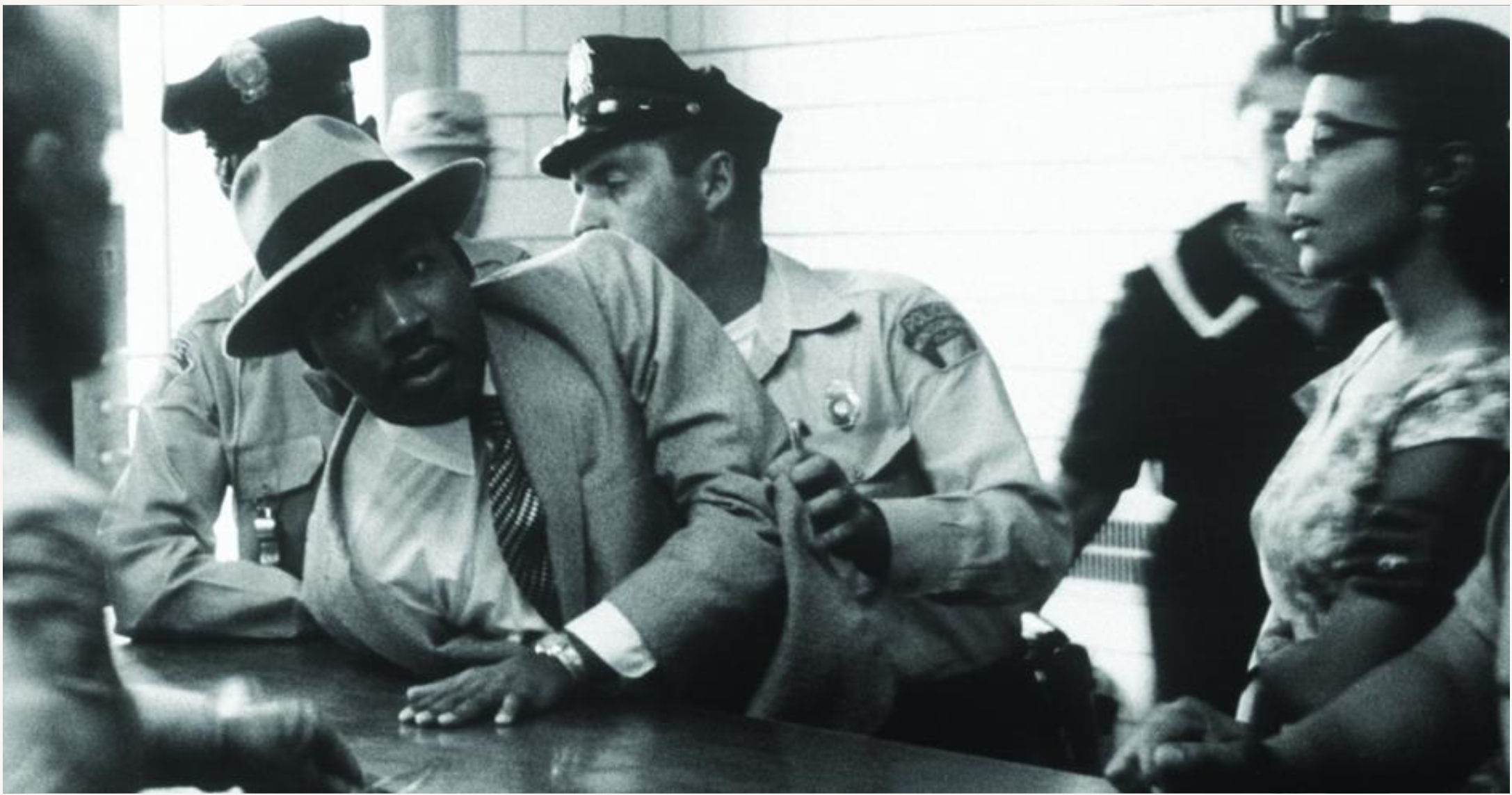 [Martin Luther King, Jr., Montgomery Jail, 1958. Photo by Charles Moore.]
- “Nonviolent resistance is not a method for cowards… This is ultimately the way of the strong man… While the nonviolent resister is passive in the sense that he is not physically aggressive toward his opponent, his mind and emotions are always active, constantly seeking to persuade his opponent that he is wrong… It is not passive non-resistance to evil, it is active nonviolent resistance to evil.”
- “Nonviolence… does not seek to defeat or humiliate the opponent, but to win his friendship and understanding. The nonviolent resister must often express his protest through noncooperation or boycotts, but he realizes that these are not ends in themselves; they are merely means to awaken a sense of moral shame in the opponent.”
- “The attack is directed against forces of evil rather than against persons who happen to be doing the evil. It is evil that the nonviolent resister seeks to defeat, not the persons victimized by evil.”
- “Nonviolent resistance [is characterized by] a willingness to accept suffering without retaliation, to accept blows from the opponent without striking back… The nonviolent resister is willing to accept violence if necessary, but never to inflict it… Unearned suffering is redemptive. Suffering, the nonviolent resister realizes, has tremendous educational and transforming possibilities.”
- “It avoids not only external physical violence but also internal violence of spirit. The nonviolent resister not only refuses to shoot his opponent but he also refuses to hate him. At the center of nonviolence stands the principle of love.
- “Nonviolent resistance… is based on the conviction that the universe is on the side of justice. Consequently, the believer in nonviolence has deep faith in the future.”
The chapter of Stride Toward Freedom in which the foregoing six principles of nonviolence were stated is below (also here):